
Frozen egg storage (annual renewal)
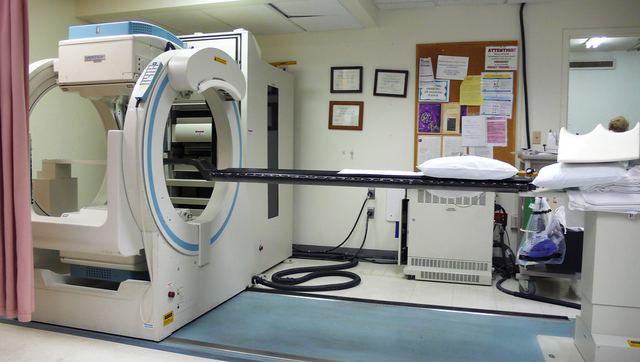
 Photo: Sailor Coruscant · CC BY 2.0
Overview
Frozen eggs are kept in liquid nitrogen at the clinic (or at a partner storage company) and the contract must be renewed every year, usually in writing. Fees are charged per container, per egg or as a flat rate depending on the clinic, and some clinics let overseas patients renew by bank transfer and post or online.
Time needed / downtime
No visit needed for renewal at most clinics; missing a renewal can lead to disposal under clinic rules.
Reference price
¥33,000
per container per year, overseas-patient fee at one Tokyo clinic (other Tokyo clinics list higher flat or per-container renewal fees)
Source: sugiyama.or.jp ↗Legal note
Clinic rules, not law, set storage terms. Clinics commonly require yearly written renewal and may set an upper age for keeping or using eggs; check what happens to eggs if you cannot be contacted.
Reference range from published sources. Actual cost is set by the facility's quote.
Facilities offering this (12)










Good to know
Non-medical egg freezing is legal; society guidelines set age limits
No Japanese law prohibits or specifically regulates egg freezing for non-medical reasons, including by unmarried women. The Japan Society for Reproductive Medicine's 2013 guideline on freezing for 'social' reasons covers adult women who consent, requires written and oral informed consent, does not recommend retrieval at age 40 or over, and does not recommend using the frozen eggs at age 45 or over. The guideline states that it does not recommend freezing itself. Individual clinics add their own age limits.
Source: jsrm.or.jp ↗JSOG position on non-medical egg freezing
The Japan Society of Obstetrics and Gynecology (JSOG) has no stand-alone guideline for non-medical egg freezing (its guideline covers medical indications such as cancer). In a May 2023 statement to the Tokyo Metropolitan Government it said it does not recommend non-medical egg freezing, asked for accurate information for women, recommended that anyone considering it first watch JSOG's explanatory video, and raised concern about storage contracts made directly between women and private companies outside registered facilities.
Source: jsog.or.jp ↗Tokyo egg-freezing subsidy: Tokyo residents only
Tokyo's subsidy is for women living in Tokyo aged 18–39 on the day of retrieval, regardless of marital status. Applicants must attend the Metropolitan Government's online briefing first, apply to join its research project, use a registered clinic and remain registered as Tokyo residents from application through to the claim. It pays up to ¥200,000 in the year of freezing and ¥20,000 a year afterwards for answering storage surveys (planned to FY2028), once per person. Visitors without a Tokyo resident registration do not qualify.
Source: fukushi.metro.tokyo.lg.jp ↗Using frozen eggs in Japan requires a partner
Freezing requires no partner, but using the eggs does: they must be fertilised by IVF/ICSI, which Japanese clinics offer to couples in a legal or de facto marriage. A Tokyo clinic summarising Japanese practice states that using frozen eggs requires a partner in a legal or common-law marriage. In practice a woman who is still single cannot use her own frozen eggs in Japan. JSOG revised its IVF/ICSI guideline in June 2026; we could not verify whether the revised text changes who may be treated, so check with the clinic.
Source: ivf-kyono.com ↗De facto couples were added to JSOG's IVF guideline in 2014
JSOG's IVF guideline originally limited treatment to legally married couples. In 2014 the society decided to extend IVF to couples in de facto (unregistered) marriages, following the 2013 Civil Code change on children born outside marriage. Single women and same-sex couples were not added. Clinics may ask de facto couples for documents showing the relationship.
Source: nikkei.com ↗Donor sperm in Japan: legally married couples only
Treatment with donor sperm (AID, and at some clinics donor-sperm IVF) is carried out under JSOG guidelines and clinic rules for legally married couples, typically where the husband has no sperm. It is not available to single women or de facto couples, so a single woman cannot combine her frozen eggs with donor sperm in Japan. A 2025 bill that would have set statutory rules on donor sperm and eggs lapsed; a revised draft reported in May 2026 would drop the legal-marriage-only rule, but it had not been confirmed as enacted when this dataset was compiled.
Source: haramedical.or.jp ↗Articles

Egg freezing in Japan: costs, steps and the limits to know
Single women can freeze eggs in Japan — but how you can use them later matters more than how you freeze them. Published prices, steps and the rules in Japan and China, in one place.
Updated 2026-11-20 · 26 sources · 9 min readFAQ
How much does Frozen egg storage (annual renewal) cost?
The reference price is ¥33,000 (per container per year, overseas-patient fee at one Tokyo clinic (other Tokyo clinics list higher flat or per-container renewal fees)). The facility's quote is final.
How long does Frozen egg storage (annual renewal) take?
No visit needed for renewal at most clinics; missing a renewal can lead to disposal under clinic rules.
Where can I get Frozen egg storage (annual renewal) in Japan?
Facilities accepting international patients include Oak Clinic, Ginza, Oak Clinic, Sumiyoshi, Sugiyama Clinic Shinjuku, Kyono ART Clinic Takanawa, Akihabara ART Clinic.
Are there legal points to know about Frozen egg storage (annual renewal)?
Clinic rules, not law, set storage terms. Clinics commonly require yearly written renewal and may set an upper age for keeping or using eggs; check what happens to eggs if you cannot be contacted.