
Egg freezing in Japan: costs, steps and the limits to know
Single women can freeze eggs in Japan — but how you can use them later matters more than how you freeze them. Published prices, steps and the rules in Japan and China, in one place.
Updated 2026-11-20
 Photo: Sandra Lee Schubert · CC BY 2.0
More women from abroad are considering egg freezing in Japan. In mainland China, single women generally cannot access egg freezing, while in Japan no law prohibits non-medical egg freezing and many clinics accept international patients.
Freezing is only the first step. We start with costs, then the process, and finish with the part most often overlooked: where and whether you can use the eggs later.
Costs: what egg freezing costs in Japan
Reference ranges from clinics' published prices. Japanese public insurance does not cover short-term visitors, so everything is self-pay, and some clinics set separate fees for overseas patients.
| Item | Reference price | Notes |
|---|---|---|
| Egg freezing cycle (stimulation, retrieval, freezing) – package | ¥275,000 – ¥330,000[1] | package at one Tokyo clinic, tax included: ¥330,000 first time, ¥275,000 from the second time (retrieval, freezing and 1 year of storage); initial exam (~¥30,000) and stimulation drugs (~¥30,000–60,000) are extra |
| Egg freezing – overseas-patient fee schedule | ¥550,000[2] | retrieval fee for overseas patients when eggs are obtained, at one Tokyo clinic; plus first consultation ¥88,000, stimulation drugs at cost (about ¥33,000–220,000) and storage ¥33,000 per container per year (¥220,000 if no eggs are retrieved) |
| Egg vitrification (freezing fee by number of eggs) | ¥33,000 – ¥132,000[3] | freezing fee at one Tokyo clinic: ¥33,000 for 1–3 eggs rising in tiers to ¥132,000 for 10–12 eggs; retrieval (¥165,000), tests/stimulation (~¥150,000) and consumables (~¥30,000) are separate |
| Frozen egg storage (annual renewal) | ¥33,000[2] | per container per year, overseas-patient fee at one Tokyo clinic (other Tokyo clinics list higher flat or per-container renewal fees) |
| Thawing frozen eggs for use | ¥11,000[4] | base thawing fee at one Osaka/Tokyo clinic group, tax included, plus ¥11,000 per storage device (each holds up to 3 eggs); ICSI and transfer extra |
| AMH (ovarian reserve) blood test | ¥7,700[5] | self-pay, tax included, at one Tokyo clinic (the insured price is lower but applies only to people in Japanese health insurance) |
| Semen analysis | ¥9,240[6] | self-pay, tax included, at one Tokyo clinic (prices vary widely between clinics) |
| IVF / ICSI cycle (self-pay) | ¥485,996 – ¥594,341[7] | clinic cost simulation, tax included, for one retrieval cycle with 5 eggs and 3 frozen embryos: from ¥485,996 (IVF, short protocol) to ¥594,341 (ICSI, antagonist protocol); embryo transfer not included |
| Embryo freezing and storage | ¥44,000[8] | freezing fee for 3 embryos, tax included, at one clinic group; storage for 3 embryos is ¥46,530 per year |
| Frozen embryo transfer | ¥82,500[8] | basic fee for embryo transfer or frozen-embryo thawing and transfer, tax included, at one clinic group (self-pay) |
| PGT-A (embryo chromosome screening) | Price on request | |
| Sperm freezing | ¥11,880[6] | per tube, including 1 year of storage, tax included, at one Tokyo clinic; renewal at the same price per tube per year |
Reference range from published sources. Actual cost is set by the facility's quote.
The process: plan for about two weeks in Japan
- Online consultation about your age, health and future plans
- Optional AMH and other tests at home before travelling
- First visit in Japan: consultation, ultrasound and blood tests
- Ovarian stimulation for roughly 8–14 days with several monitoring visits
- Egg retrieval, usually under sedation; rest at your hotel the same day
- Vitrification and storage, renewed every year
Law and limits
Non-medical egg freezing is legal; society guidelines set age limits
No Japanese law prohibits or specifically regulates egg freezing for non-medical reasons, including by unmarried women. The Japan Society for Reproductive Medicine's 2013 guideline on freezing for 'social' reasons covers adult women who consent, requires written and oral informed consent, does not recommend retrieval at age 40 or over, and does not recommend using the frozen eggs at age 45 or over. The guideline states that it does not recommend freezing itself. Individual clinics add their own age limits.[9]
JSOG position on non-medical egg freezing
The Japan Society of Obstetrics and Gynecology (JSOG) has no stand-alone guideline for non-medical egg freezing (its guideline covers medical indications such as cancer). In a May 2023 statement to the Tokyo Metropolitan Government it said it does not recommend non-medical egg freezing, asked for accurate information for women, recommended that anyone considering it first watch JSOG's explanatory video, and raised concern about storage contracts made directly between women and private companies outside registered facilities.[10]
Tokyo egg-freezing subsidy: Tokyo residents only
Tokyo's subsidy is for women living in Tokyo aged 18–39 on the day of retrieval, regardless of marital status. Applicants must attend the Metropolitan Government's online briefing first, apply to join its research project, use a registered clinic and remain registered as Tokyo residents from application through to the claim. It pays up to ¥200,000 in the year of freezing and ¥20,000 a year afterwards for answering storage surveys (planned to FY2028), once per person. Visitors without a Tokyo resident registration do not qualify.[11]
Using frozen eggs in Japan requires a partner
Freezing requires no partner, but using the eggs does: they must be fertilised by IVF/ICSI, which Japanese clinics offer to couples in a legal or de facto marriage. A Tokyo clinic summarising Japanese practice states that using frozen eggs requires a partner in a legal or common-law marriage. In practice a woman who is still single cannot use her own frozen eggs in Japan. JSOG revised its IVF/ICSI guideline in June 2026; we could not verify whether the revised text changes who may be treated, so check with the clinic.[12]
De facto couples were added to JSOG's IVF guideline in 2014
JSOG's IVF guideline originally limited treatment to legally married couples. In 2014 the society decided to extend IVF to couples in de facto (unregistered) marriages, following the 2013 Civil Code change on children born outside marriage. Single women and same-sex couples were not added. Clinics may ask de facto couples for documents showing the relationship.[13]
Donor sperm in Japan: legally married couples only
Treatment with donor sperm (AID, and at some clinics donor-sperm IVF) is carried out under JSOG guidelines and clinic rules for legally married couples, typically where the husband has no sperm. It is not available to single women or de facto couples, so a single woman cannot combine her frozen eggs with donor sperm in Japan. A 2025 bill that would have set statutory rules on donor sperm and eggs lapsed; a revised draft reported in May 2026 would drop the legal-marriage-only rule, but it had not been confirmed as enacted when this dataset was compiled.[14]
Taking frozen eggs or embryos out of Japan is a clinic decision
We found no Japanese law that bans exporting frozen eggs or embryos; it depends on each clinic's rules and on the receiving country's import rules. One Tokyo clinic says eggs can be moved to facilities in Japan or abroad, asks for requests at least two months ahead, and may not be able to lend a shipping container for some destinations. Another requires the patient to find a specialist courier for overseas transfers and a signed consent naming the receiving clinic. A third states that frozen eggs in principle cannot be taken outside the clinic. Ask before freezing, not after.[15]
Some clinics do not release frozen eggs
Policies differ sharply. One large Tokyo fertility clinic's egg-freezing page states that frozen eggs in principle cannot be taken out of the clinic, while other clinics publish transfer forms and fee schedules for moving frozen eggs, embryos and sperm to other facilities, including from or to overseas. Anyone planning to use eggs outside Japan should get the clinic's transfer policy in writing before treatment.[16]
Mainland China: single women cannot freeze eggs
Mainland clinics follow the former Ministry of Health's Technical Norms for Human Assisted Reproductive Technology, which prohibit providing assisted reproduction to single women and to couples who do not meet family-planning rules. The National Health Commission said in 2020 that freezing eggs for single women to delay childbearing does not comply with Chinese laws and regulations, citing health risks, ethical debate and commercialisation. Jilin's provincial rule allowing unmarried women to use assisted reproduction has had little effect because clinics follow the national norms.[17]
Xu Zaozao egg-freezing lawsuit: final ruling against her
In China's first lawsuit by a single woman refused egg freezing (by a Beijing public hospital in 2018), the Beijing No. 3 Intermediate People's Court dismissed her appeal and upheld the 2022 first-instance ruling; the final judgment was reported in August 2024. The court said her claim lacked legal basis given the existing laws, regulations and clinical norms, while noting the rules may change as birth policy develops.[18]
Bringing eggs frozen abroad back to China: no clear official route
We found no official Chinese guidance on importing a woman's own eggs frozen abroad. Human genetic resource materials are regulated under State Council Decree No. 717, and law-firm commentary notes that customs lists human genetic resources among restricted items requiring approval documents for cross-border movement. Even if eggs arrive, mainland clinics may only use them under the same rules as domestic ART, which require a married couple. Confirm with Chinese customs and the intended clinic before freezing abroad with the aim of using the eggs in China.[19]
Surrogacy in Japan: banned by JSOG, no statute yet
Japan has no law on surrogacy. JSOG guidelines, which bind member doctors, do not allow gestational surrogacy, and under Japanese case law and the 2020 Civil Code special act the woman who gives birth is the legal mother. A cross-party bill on donor sperm and eggs (特定生殖補助医療法案) was submitted to the House of Councillors in February 2025 but lapsed without debate in June 2025, and surrogacy was left outside its scope. A revised outline was reported in May 2026; we could not confirm that it had been submitted or passed as of November 2026.[20]
Surrogacy in mainland China: prohibited, enforcement stepped up in 2026
The 2001 Administrative Measures for Human Assisted Reproductive Technology prohibit any buying or selling of gametes, zygotes or embryos and bar medical institutions and staff from performing any form of surrogacy. In 2026 the national work plan against improper practices in healthcare added surrogacy for the first time, local authorities shut down illegal operations, and on 13 November 2026 a National Health Commission spokesperson said China strictly prohibits all forms of surrogacy, organising it is illegal, and so-called surrogacy agreements are not protected by law.[21]
Egg and sperm donation in Japan
Japan has no statute regulating egg or sperm donation. Donor-sperm insemination has been practised for decades under JSOG rules for married couples. Egg donation is outside JSOG guidelines, but member clinics of JISART have carried out a limited number of donations from sisters and friends after ethics review, and an anonymous-donor programme has also been reported; commercial donation is not accepted. The 2020 Civil Code special act makes the woman who gives birth the mother of a child conceived with a donor egg, and bars a husband who consented to donor sperm from denying paternity.[22]
Fertility clinics that accept international patients









Practical information before you travel
Visa and length of stay for one egg-freezing cycle
Mainland Chinese nationals need a visa to enter Japan. A short-term stay visa or Japan's Medical Stay Visa (which requires a certificate from the receiving clinic and a registered guarantor) can cover a fertility trip. One stimulation cycle needs about 2 weeks in Japan from early in the menstrual cycle to retrieval; one Osaka/Tokyo clinic group says it can adapt protocols for patients from overseas with a fixed stay deadline. Using the eggs or embryos later requires a separate trip.[23]
All costs are self-pay for non-residents
Egg freezing is never covered by Japanese health insurance, and patients without Japanese public insurance pay self-pay prices for every test and treatment, usually in yen by cash or card. Some clinics charge overseas patients more than domestic self-pay patients or add language-support fees (for example, an English-language fee per visit at one Tokyo clinic, and a ¥5,500 per-day multilingual support fee for insured visits at another under the April 2026 fee revision).[24]
Many clinics limit non-resident or interpreter-dependent patients
Check acceptance before planning travel. Examples found: one Tokyo clinic accepts foreign nationals only if they hold Japanese health insurance or a residence permit; another has temporarily stopped accepting new foreign patients who need interpreting; another consults only in Japanese and does not take first-visit bookings from people living abroad; another requires overseas patients to come through a medical-travel support company. Clinics that do accept visitors often provide Chinese or English support only through specific staff or channels.[25]
Advertising and intermediary rules
Japan's Medical Care Act and MHLW's Medical Advertising Guidelines cover clinic websites and paid listings: patient testimonials, misleading before/after material, superlatives and comparisons with other clinics are prohibited, and self-pay treatments must show costs and main risks. For visa purposes, a Medical Stay Visa must go through a guarantor registered with MOFA, and arranging travel for patients generally requires travel-agency registration.[26]
FAQ
How much does Egg freezing cycle (stimulation, retrieval, freezing) – package cost?
The reference price is ¥275,000 – ¥330,000 (package at one Tokyo clinic, tax included: ¥330,000 first time, ¥275,000 from the second time (retrieval, freezing and 1 year of storage); initial exam (~¥30,000) and stimulation drugs (~¥30,000–60,000) are extra). The facility's quote is final.
How much does Egg freezing – overseas-patient fee schedule cost?
The reference price is ¥550,000 (retrieval fee for overseas patients when eggs are obtained, at one Tokyo clinic; plus first consultation ¥88,000, stimulation drugs at cost (about ¥33,000–220,000) and storage ¥33,000 per container per year (¥220,000 if no eggs are retrieved)). The facility's quote is final.
How much does Egg vitrification (freezing fee by number of eggs) cost?
The reference price is ¥33,000 – ¥132,000 (freezing fee at one Tokyo clinic: ¥33,000 for 1–3 eggs rising in tiers to ¥132,000 for 10–12 eggs; retrieval (¥165,000), tests/stimulation (~¥150,000) and consumables (~¥30,000) are separate). The facility's quote is final.
How much does Frozen egg storage (annual renewal) cost?
The reference price is ¥33,000 (per container per year, overseas-patient fee at one Tokyo clinic (other Tokyo clinics list higher flat or per-container renewal fees)). The facility's quote is final.
How much does Thawing frozen eggs for use cost?
The reference price is ¥11,000 (base thawing fee at one Osaka/Tokyo clinic group, tax included, plus ¥11,000 per storage device (each holds up to 3 eggs); ICSI and transfer extra). The facility's quote is final.
How much does AMH (ovarian reserve) blood test cost?
The reference price is ¥7,700 (self-pay, tax included, at one Tokyo clinic (the insured price is lower but applies only to people in Japanese health insurance)). The facility's quote is final.
How much does Semen analysis cost?
The reference price is ¥9,240 (self-pay, tax included, at one Tokyo clinic (prices vary widely between clinics)). The facility's quote is final.
How much does IVF / ICSI cycle (self-pay) cost?
The reference price is ¥485,996 – ¥594,341 (clinic cost simulation, tax included, for one retrieval cycle with 5 eggs and 3 frozen embryos: from ¥485,996 (IVF, short protocol) to ¥594,341 (ICSI, antagonist protocol); embryo transfer not included). The facility's quote is final.
Sources
- https://www.aacivf.com/price.html
- https://www.sugiyama.or.jp/reproduction/cost
- https://kiba-park.jp/column/c21-0307/
- https://www.oakclinic-group.com/en/cp_oocyte/ss_freezeegg/
- https://www.haramedical.or.jp/price/fertility-testing
- https://www.haramedical.or.jp/price/sperm-freezing
- https://www.oakclinic-group.com/en/funin/fees_simulation/
- https://www.oakclinic-group.com/en/funin/fees/
- http://www.jsrm.or.jp/guideline-statem/guideline_2013_ovumfrozen_social.pdf
- https://www.jsog.or.jp/news_m/2169/
- https://www.fukushi.metro.tokyo.lg.jp/kodomo/shussan/ranshitouketsu/touketsu/gaiyou
- https://ivf-kyono.com/column/post-8565/
- https://www.nikkei.com/article/DGXNASDG0601L_W4A100C1CR0000/
- https://www.haramedical.or.jp/treatment/aid-ivfd
- https://www.ivf-shinagawa.com/frozen/
- https://www.sugiyama.or.jp/reproduction/consult/unfertilized-egg
- https://www.thepaper.cn/newsDetail_forward_23965878
- https://m.thepaper.cn/newsDetail_forward_28356707
- https://www.fieldfisher.com/zh-cn/insights/人类遗传资源出境-对外提供的合规管理
- https://ryukyushimpo.jp/kyodo/entry-5248325.html
- https://m.jiemian.com/article/15331176.html
- https://www.moj.go.jp/MINJI/minji07_00072.html
- https://www.mofa.go.jp/j_info/visit/visa/medical_stay1.html
- https://obatakai.or.jp/en/egg-freezing/
- https://fert-tokyo.jp/info/first.html
- https://www.mhlw.go.jp/content/001683594.pdf
Articles
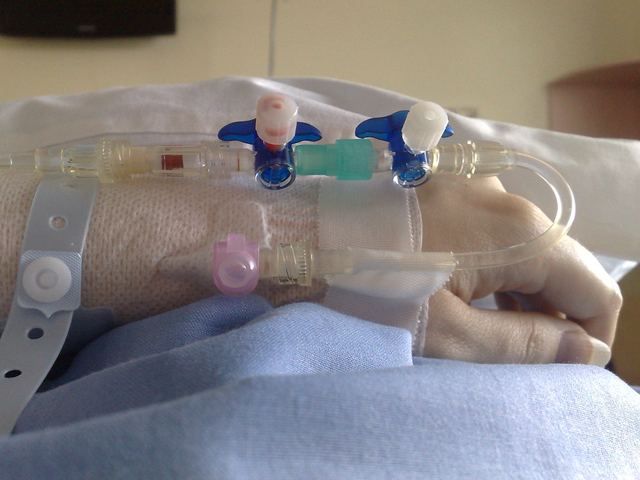
Injections in Japan: vaccines, IV drips and regenerative medicine
The 9-valent HPV vaccine, high-dose vitamin C drips, stem cells — all are 'injections', but their legal status in Japan is very different.
Updated 2026-11-20 · 5 sources · 2 min read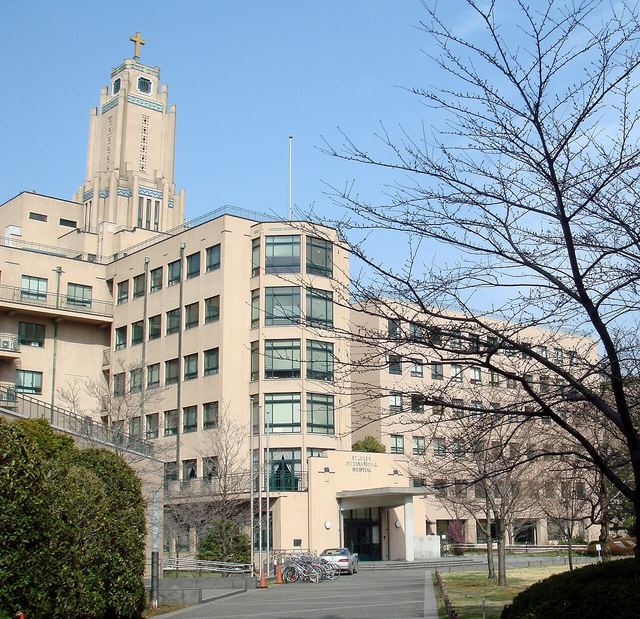
Ningen Dock and PET-CT: how health checkups in Japan work
From half-day packages to two-day premium courses: how to choose, what it costs, and what happens on the day.
Updated 2026-11-20 · 12 sources · 3 min read
Onsen and wellness in Japan: from tōji to certified health facilities
Many visitors pair a checkup with an onsen stay. Which facilities are government-certified, and what should you know before bathing?
Updated 2026-11-20 · 18 sources · 5 min read