
Prenatal and preimplantation testing in Japan: what NIPT and PGT-A can do
Japan certifies NIPT providers and sets strict conditions for PGT-A. What is and isn't possible, explained.
Updated 2026-11-20
 Photo: Muffet · CC BY 2.0
NIPT screens the mother's blood for certain fetal chromosomal conditions; PGT-A checks embryo chromosome numbers during IVF. Both are legal in Japan with clear rules: NIPT is recommended at certified facilities with genetic counselling, and PGT-A is limited to patients meeting the Japan Society of Obstetrics and Gynecology's criteria.
Tests and reference prices
| Item | Reference price | Notes |
|---|---|---|
| NIPT at a certified facility | ¥132,000[1] | per test, at a Tokyo certified linked facility (2025 price list); counseling ¥5,000 extra, and follow-up after a positive or inconclusive result is referred to the core hospital at separate cost. Prices at other certified facilities seen ranged from about ¥89,000 (analysis fee only) to ¥200,000. |
| Prenatal genetic counseling | ¥5,500 – ¥8,800[2] | per session at a Tokyo university hospital certified as an NIPT core facility: first visit ¥8,800, follow-up ¥5,500 |
| Amniocentesis (confirmatory diagnosis) | ¥90,000 – ¥120,000[3] | per test, tax excluded, at a national hospital in Hiroshima: G-band analysis ¥90,000; G-band plus FISH ¥120,000 (lower fees apply there after a positive NIPT at the same hospital; other hospitals list about ¥200,000) |
| Chorionic villus sampling (CVS) | Price on request | |
| PGT-A (embryo chromosome-number testing) | ¥350,000[4] | per test round covering up to 4 embryos, PGT-A as an advanced medical care (senshin iryo) technology at a university hospital in Tokushima, as listed by the health ministry (testing fee only; IVF costs are separate). Unverified: figure taken from a search excerpt of the ministry list. |
| PGT-SR (testing for structural chromosome rearrangements) | Price on request | |
| PGT-M (testing for a serious inherited disease) | Price on request |
Reference range from published sources. Actual cost is set by the facility's quote.
The rules
How NIPT certification works in Japan
Since July 2022, facilities offering NIPT are certified by the Committee for the Operation of the Prenatal Testing Certification System set up under the Japanese Association of Medical Sciences (JAMS). Hospitals are certified either as core facilities (kikan shisetsu) or as linked facilities (renkei shisetsu) that work with a core facility, and laboratories that analyse samples are certified separately. Certification must be renewed every five years, and applications are reviewed twice a year.[5]
What certified facilities test and how
At certified facilities NIPT covers only trisomy 21 (Down syndrome), trisomy 18 and trisomy 13. Genetic counseling is required before the test, and a positive result is treated as a screening finding that must be confirmed by amniocentesis or chorionic villus sampling. In fiscal 2022 there were 169 certified core facilities, 206 linked facilities and 27 certified laboratories, which performed 20,639 tests.[6]
Concerns about NIPT outside the certification system
A health ministry expert committee noted that NIPT offered by non-certified facilities had increased and that in some cases adequate genetic counseling was not provided. The national framework also states that prenatal testing should not be carried out or promoted as uniform mass screening. The JAMS committee recommends that pregnant women take NIPT at certified facilities and publishes information materials, including an English explanation leaflet. Testing at non-certified facilities falls outside this framework.[7]
Fetal sex determination in Japanese prenatal testing
Certified NIPT in Japan is limited to the three trisomies, so fetal sex chromosomes are not among the items reported. Under the guidance of the Japan Society of Obstetrics and Gynecology (JSOG), sex determination of embryos or fetuses is accepted only where it is needed for a serious sex-linked (X-linked) genetic disease, and sex selection for non-medical reasons is not permitted. JSOG's guidance binds its members; Japan has no specific statute on it.[8]
JSOG eligibility for PGT-A and PGT-SR
PGT-A may be performed only at facilities approved by JSOG, which must register each case and report results. Its rules limit PGT-A to infertile couples with repeated failure of IVF embryo transfer and couples with recurrent miscarriage or stillbirth; couples in which a partner has a confirmed structural chromosome abnormality are handled as PGT-SR. Genetic counseling must be available at the facility or a partner facility.[9]
2025 expansion of PGT-A to women aged 35 and over
In September 2025 JSOG began allowing infertile couples in which the woman is 35 or older to undergo preimplantation testing for chromosome number, in addition to the earlier criteria of repeated IVF failure or recurrent pregnancy loss. Between 2022 and 2024 the society approved 110 of 124 applications for preimplantation diagnosis of genetic disease (PGT-M).[10]
PGT-A as advanced medical care and self-pay
PGT-A has been evaluated in Japan as advanced medical care (senshin iryo, category B), which allows it to be combined with insured IVF at participating hospitals within a study with a capped number of participants; Osaka University Hospital stopped new registrations once its cap was reached. Patients outside Japanese health insurance, including overseas visitors, pay the full cost of IVF and PGT themselves.[11]
PGT rules in Japan rest on society guidance, not statute
Japan has no law that directly regulates preimplantation genetic testing. The Science Council of Japan noted in 2023 that JSOG's rules apply only to its members and have no legal binding force, and that some patients seek PGT abroad. Within Japan, approved facilities follow JSOG's views and detailed rules, including case-by-case review for PGT-M.[12]
Mainland China's law bans non-medical fetal sex identification
China's Population and Family Planning Law (amended 2015 and 2021) prohibits using ultrasound or other technical means to identify fetal sex without medical need, and prohibits sex-selective termination of pregnancy without medical need. Anyone who performs such identification or termination for others faces correction orders, warnings, confiscation of illegal income and fines (two to six times the illegal income where it is CNY 10,000 or more, otherwise CNY 10,000–30,000), and practising certificates can be revoked in serious cases.[13]
China's 2016 rules also cover intermediaries
The Provisions on the Prohibition of Non-Medically Necessary Fetal Sex Identification and Sex-Selective Abortion, in force since 1 May 2016 and issued by the national health and family planning commission with the industry-and-commerce and drug regulators, apply the ban to any organisation or individual. Article 3 also prohibits introducing or organising pregnant women to obtain such identification or termination, and the provisions set administrative penalties for those who do so, as well as rules on advertising and on the sale of ultrasound and chromosome-testing equipment. Medical needs such as a suspected serious sex-linked genetic disease are excepted.[14]
China restricts sending human genetic samples abroad
Under China's Regulations on the Management of Human Genetic Resources (in force since July 2019), foreign organisations and individuals, and institutions they set up or control, may not collect or store Chinese human genetic resources in China or provide them abroad. Human genetic resource materials, meaning organs, tissues, cells and similar material containing the human genome, may be transported, mailed or carried out of China only in permitted cases and with an export certificate from the competent authority, which customs checks. A blood sample taken in mainland China for genetic testing by a laboratory abroad therefore falls under these controls.[15]
Oversight moved to the National Health Commission; rules revised in 2026
A 2024 State Council amendment transferred responsibility for human genetic resources from the Ministry of Science and Technology to the National Health Commission with effect from 1 May 2024. On 11 November 2026 the Commission published revised Implementing Rules for the regulations (61 articles in eight chapters, covering collection, storage, international cooperation, export and overseas provision of information), effective on publication.[16]
Facilities









FAQ
How much does NIPT at a certified facility cost?
The reference price is ¥132,000 (per test, at a Tokyo certified linked facility (2025 price list); counseling ¥5,000 extra, and follow-up after a positive or inconclusive result is referred to the core hospital at separate cost. Prices at other certified facilities seen ranged from about ¥89,000 (analysis fee only) to ¥200,000.). The facility's quote is final.
How much does Prenatal genetic counseling cost?
The reference price is ¥5,500 – ¥8,800 (per session at a Tokyo university hospital certified as an NIPT core facility: first visit ¥8,800, follow-up ¥5,500). The facility's quote is final.
How much does Amniocentesis (confirmatory diagnosis) cost?
The reference price is ¥90,000 – ¥120,000 (per test, tax excluded, at a national hospital in Hiroshima: G-band analysis ¥90,000; G-band plus FISH ¥120,000 (lower fees apply there after a positive NIPT at the same hospital; other hospitals list about ¥200,000)). The facility's quote is final.
How much does PGT-A (embryo chromosome-number testing) cost?
The reference price is ¥350,000 (per test round covering up to 4 embryos, PGT-A as an advanced medical care (senshin iryo) technology at a university hospital in Tokushima, as listed by the health ministry (testing fee only; IVF costs are separate). Unverified: figure taken from a search excerpt of the ministry list.). The facility's quote is final.
Sources
- https://katsushika.jrc.or.jp/practice/gynecology/upload/20250414-094936-8867.pdf
- https://teikyo-hospital.jp/medical/especial/geneticcounseling/pdf/2025_prenatal_reservation_6.pdf
- https://higashihiroshima.hosp.go.jp/files/000201534.pdf
- https://www.mhlw.go.jp/content/10808000/001371151.pdf
- https://jams-prenatal.jp/file/iryoukikanninsyosaisoku.pdf
- https://www.jams-prenatal.jp/file/nipt_report.pdf
- https://www.mhlw.go.jp/content/000783387.pdf
- https://www.jstage.jst.go.jp/article/jabedit/24/1/24_KJ00009962008/_article/-char/en
- https://www.fujita-hu.ac.jp/~japco/media/20260127-104239-149.pdf
- https://www.japantimes.co.jp/news/2025/09/09/japan/science-health/preimplantation-testing-expansion
- https://www.med.osaka-u.ac.jp/pub/gyne/wp-content/uploads/2024/01/8346f0366d1fbd06e50058ecb8d6583e.pdf
- https://www.scj.go.jp/ja/info/kohyo/pdf/kohyo-25-t351-2en.pdf
- https://wjw.guizhou.gov.cn/ztzl_500663/hmzcmbk/202501/P020250107385700929693.pdf
- https://www.nhc.gov.cn/wjw/c100221/202201/f8cfceffaf1847db863ccc8a89b7684f/files/禁止非医学需要的胎儿性别鉴定和选择性别人工终止妊娠的规定.pdf
- https://www.gov.cn/zhengce/content/2019-06/10/content_5398829.htm
- https://www.news.cn/20261111/a6cbb9396eb74b67b8ade7827c18fe00/c.html
Articles

Egg freezing in Japan: costs, steps and the limits to know
Single women can freeze eggs in Japan — but how you can use them later matters more than how you freeze them. Published prices, steps and the rules in Japan and China, in one place.
Updated 2026-11-20 · 26 sources · 9 min read
Injections in Japan: vaccines, IV drips and regenerative medicine
The 9-valent HPV vaccine, high-dose vitamin C drips, stem cells — all are 'injections', but their legal status in Japan is very different.
Updated 2026-11-20 · 5 sources · 2 min read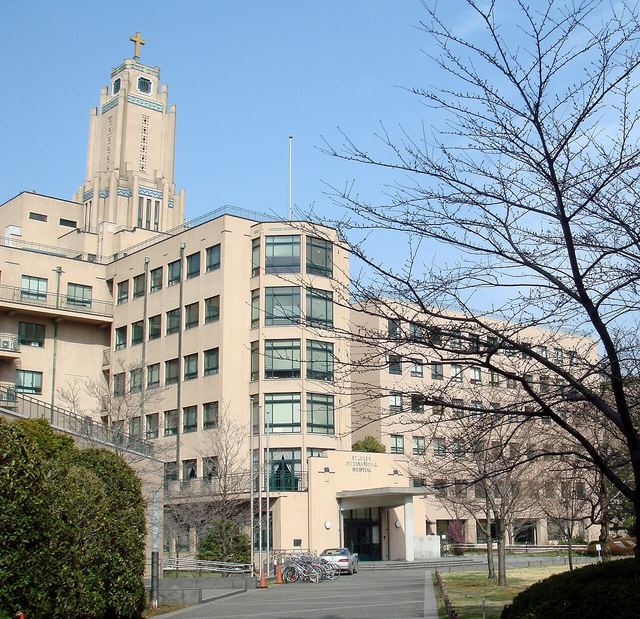
Ningen Dock and PET-CT: how health checkups in Japan work
From half-day packages to two-day premium courses: how to choose, what it costs, and what happens on the day.
Updated 2026-11-20 · 12 sources · 3 min read